← 返回列表
🔗 原文
产品中应避免使用的七种传感器和转接板
The Seven Sensors and Breakout Boards to Avoid in a Product

We’ve all seen these sensors and modules kicking around, as part of beginner kits, strapped into prototypes and potentially even in products deployed in the field. Yet as [John Teel] rightfully points out in a recent video, most of these have no business ever being used in a real product, and might not even be suitable for prototyping.

First up is a combination of the related DHT11 and DHT22 temperature-humidity sensors. As common as these are, they’re also pretty sketchy with their proprietary one-wire protocol and at most questionable accuracy, worsened by not having a good supply chain. The replacements are plentiful: the SHT40 and SHT41, the Bosch Sensortec BME280 or BMP180, as well as TI’s HDC3020. These get you standard I2C communication and a supply chain plus a datasheet you can trust.
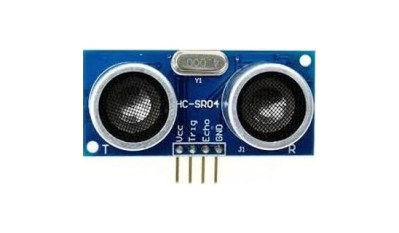
Second is the HC-SR04 ultrasonic distance sensor. Although fine for prototyping, it’s a 5 V module, lacks temperature compensation and other features that’d be needed outside a temperature-controlled room. Here ST’s VL53 Time-of-Flight sensors are a good alternative, containing a range of sensors of which we covered the fancier VL53L5CX previously for 3D scanning a room. Of course, you can also use reflective IR as a good cheap alternative.

Third is the HC-SR501 passive infrared (PIR) motion module. This one is also fine for PIR and motion sensing prototyping, but is too inconsistent and power-hungry for production. Instead you can get much better and much smaller PIR modules, like the Panasonic EKMC and EKMB, or the ST STHS34 IR motion and presence sensor.

Fourth takes a swing at all the MQ-series of gas sensors. These generally feature a heater that consumes a lot of power, require a long burn-in period and need calibration using a reference gas to be useful. In a safety-first environment you’d thus use a sensor from a reputable manufacturer with a datasheet and some level of calibration.

Fifth is the MPU-6050 IMU, which probably comes as a surprise to many, as it generally seems to just work well. The main issue here is something that is common for a lot of common non-sensor chips as well, like the still very common UDA1334A I2S codec that hasn’t been manufactured by NXP for ages, but is still found everywhere. If you want to design a product that can be easily manufactured, you have to pick an IMU here that is actively being manufactured by a reputable manufacturer.
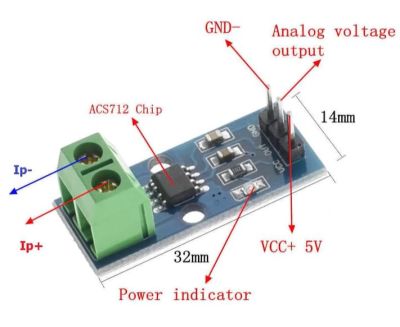
How not to use the ACS712 IC to sense mains current. Avoid this breakout board.

You also have to actively avoid anything that’s marked as ‘Not Recommended for New Designs’ (NRND) unless you love supply surprises during production. For IMUs you end up with something like the Bosch BMI270 or TDK’s ICM-42688, albeit it for more money, but with better specifications.

Sixth sensor are cadmium sulfide photoresistors (LDRs). Although this is a very simple light-dependent resistor part, they fall afoul of the EU’s RoHS regulations due to the presence of said cadmium. Fortunately they’re not that great anyway, so an ambient light sensor IC is a good alternative. Here the Vishay VEML7700, TI OPT3001 and Lite-On LTR-303 are recommended and provide far more features at a reasonable BOM cost.

Seventh sensor and #1 on the list is the ACS712 current sensor. Specifically the mains-targeting breakout boards that are being sold everywhere. Here it’s not the IC that’s the problem, it’s that here – as also seen with various common relay boards – there has been no consideration given to basic mains power safety, such as creepage distance and general separation. The lesson here is that if you integrate mains power in your device, you do not skimp on safety with a sketchy module.

🤖 AI 总结
文章列举七种应避免用于产品的传感器和扩展板,这些器件虽常见于初学者套件和原型,但可靠性不足,不适合量产产品。

We’ve all seen these sensors and modules kicking around, as part of beginner kits, strapped into prototypes and potentially even in products deployed in the field. Yet as [John Teel] rightfully points out in a recent video, most of these have no business ever being used in a real product, and might not even be suitable for prototyping.

First up is a combination of the related DHT11 and DHT22 temperature-humidity sensors. As common as these are, they’re also pretty sketchy with their proprietary one-wire protocol and at most questionable accuracy, worsened by not having a good supply chain. The replacements are plentiful: the SHT40 and SHT41, the Bosch Sensortec BME280 or BMP180, as well as TI’s HDC3020. These get you standard I2C communication and a supply chain plus a datasheet you can trust.

Second is the HC-SR04 ultrasonic distance sensor. Although fine for prototyping, it’s a 5 V module, lacks temperature compensation and other features that’d be needed outside a temperature-controlled room. Here ST’s VL53 Time-of-Flight sensors are a good alternative, containing a range of sensors of which we covered the fancier VL53L5CX previously for 3D scanning a room. Of course, you can also use reflective IR as a good cheap alternative.

Third is the HC-SR501 passive infrared (PIR) motion module. This one is also fine for PIR and motion sensing prototyping, but is too inconsistent and power-hungry for production. Instead you can get much better and much smaller PIR modules, like the Panasonic EKMC and EKMB, or the ST STHS34 IR motion and presence sensor.

Fourth takes a swing at all the MQ-series of gas sensors. These generally feature a heater that consumes a lot of power, require a long burn-in period and need calibration using a reference gas to be useful. In a safety-first environment you’d thus use a sensor from a reputable manufacturer with a datasheet and some level of calibration.

Fifth is the MPU-6050 IMU, which probably comes as a surprise to many, as it generally seems to just work well. The main issue here is something that is common for a lot of common non-sensor chips as well, like the still very common UDA1334A I2S codec that hasn’t been manufactured by NXP for ages, but is still found everywhere. If you want to design a product that can be easily manufactured, you have to pick an IMU here that is actively being manufactured by a reputable manufacturer.

How not to use the ACS712 IC to sense mains current. Avoid this breakout board.

You also have to actively avoid anything that’s marked as ‘Not Recommended for New Designs’ (NRND) unless you love supply surprises during production. For IMUs you end up with something like the Bosch BMI270 or TDK’s ICM-42688, albeit it for more money, but with better specifications.

Sixth sensor are cadmium sulfide photoresistors (LDRs). Although this is a very simple light-dependent resistor part, they fall afoul of the EU’s RoHS regulations due to the presence of said cadmium. Fortunately they’re not that great anyway, so an ambient light sensor IC is a good alternative. Here the Vishay VEML7700, TI OPT3001 and Lite-On LTR-303 are recommended and provide far more features at a reasonable BOM cost.

Seventh sensor and #1 on the list is the ACS712 current sensor. Specifically the mains-targeting breakout boards that are being sold everywhere. Here it’s not the IC that’s the problem, it’s that here – as also seen with various common relay boards – there has been no consideration given to basic mains power safety, such as creepage distance and general separation. The lesson here is that if you integrate mains power in your device, you do not skimp on safety with a sketchy module.

原文
The Seven Sensors and Breakout Boards to Avoid in a Product

We’ve all seen these sensors and modules kicking around, as part of beginner kits, strapped into prototypes and potentially even in products deployed in the field. Yet as [John Teel] rightfully points out in a recent video, most of these have no business ever being used in a real product, and might not even be suitable for prototyping.

First up is a combination of the related DHT11 and DHT22 temperature-humidity sensors. As common as these are, they’re also pretty sketchy with their proprietary one-wire protocol and at most questionable accuracy, worsened by not having a good supply chain. The replacements are plentiful: the SHT40 and SHT41, the Bosch Sensortec BME280 or BMP180, as well as TI’s HDC3020. These get you standard I2C communication and a supply chain plus a datasheet you can trust.

Second is the HC-SR04 ultrasonic distance sensor. Although fine for prototyping, it’s a 5 V module, lacks temperature compensation and other features that’d be needed outside a temperature-controlled room. Here ST’s VL53 Time-of-Flight sensors are a good alternative, containing a range of sensors of which we covered the fancier VL53L5CX previously for 3D scanning a room. Of course, you can also use reflective IR as a good cheap alternative.

Third is the HC-SR501 passive infrared (PIR) motion module. This one is also fine for PIR and motion sensing prototyping, but is too inconsistent and power-hungry for production. Instead you can get much better and much smaller PIR modules, like the Panasonic EKMC and EKMB, or the ST STHS34 IR motion and presence sensor.

Fourth takes a swing at all the MQ-series of gas sensors. These generally feature a heater that consumes a lot of power, require a long burn-in period and need calibration using a reference gas to be useful. In a safety-first environment you’d thus use a sensor from a reputable manufacturer with a datasheet and some level of calibration.

Fifth is the MPU-6050 IMU, which probably comes as a surprise to many, as it generally seems to just work well. The main issue here is something that is common for a lot of common non-sensor chips as well, like the still very common UDA1334A I2S codec that hasn’t been manufactured by NXP for ages, but is still found everywhere. If you want to design a product that can be easily manufactured, you have to pick an IMU here that is actively being manufactured by a reputable manufacturer.

How not to use the ACS712 IC to sense mains current. Avoid this breakout board.

You also have to actively avoid anything that’s marked as ‘Not Recommended for New Designs’ (NRND) unless you love supply surprises during production. For IMUs you end up with something like the Bosch BMI270 or TDK’s ICM-42688, albeit it for more money, but with better specifications.

Sixth sensor are cadmium sulfide photoresistors (LDRs). Although this is a very simple light-dependent resistor part, they fall afoul of the EU’s RoHS regulations due to the presence of said cadmium. Fortunately they’re not that great anyway, so an ambient light sensor IC is a good alternative. Here the Vishay VEML7700, TI OPT3001 and Lite-On LTR-303 are recommended and provide far more features at a reasonable BOM cost.

Seventh sensor and #1 on the list is the ACS712 current sensor. Specifically the mains-targeting breakout boards that are being sold everywhere. Here it’s not the IC that’s the problem, it’s that here – as also seen with various common relay boards – there has been no consideration given to basic mains power safety, such as creepage distance and general separation. The lesson here is that if you integrate mains power in your device, you do not skimp on safety with a sketchy module.

中文翻译
产品中应避免使用的七种传感器和转接板

我们都见过这些传感器和模块,它们出现在入门套件中,绑在原型里,甚至可能出现在现场部署的产品中。然而,正如 [John Teel] 在最近的一段视频中正确指出的那样,其中大多数根本不应该用在真正的产品中,甚至可能不适合用于原型制作。

首先是相关的 DHT11 和 DHT22 温湿度传感器的组合。虽然这些传感器很常见,但它们专有的单总线协议和令人质疑的精度也相当不可靠,再加上供应链不稳定,情况更糟。替代品有很多:SHT40 和 SHT41、Bosch Sensortec 的 BME280 或 BMP180,以及 TI 的 HDC3020。这些可以让你获得标准 I2C 通信、可靠的供应链以及值得信赖的数据手册。

第二个是 HC-SR04 超声波距离传感器。虽然它适合原型制作,但它是一个 5 V 模块,缺乏温度补偿和其他在温度受控房间之外所需的功能。这里 ST 的 VL53 飞行时间传感器是一个不错的选择,其中包括一系列传感器,我们之前介绍过更高端的 VL53L5CX,用于 3D 扫描房间。当然,你也可以使用反射式红外作为廉价的好替代方案。

第三个是 HC-SR501 被动红外(PIR)运动模块。这个模块同样适合 PIR 和运动感应原型制作,但对于生产来说太不稳定且功耗过高。相反,你可以获得更好、更小的 PIR 模块,例如松下 EKMC 和 EKMB,或 ST 的 STHS34 红外运动和存在传感器。

第四个是针对所有 MQ 系列气体传感器的。这些传感器通常具有一个消耗大量功率的加热器,需要很长的老化时间,并且需要使用参考气体进行校准才能发挥作用。因此,在以安全为先的环境中,你应该使用来自信誉良好的制造商、带有数据手册和一定校准程度的传感器。

第五个是 MPU-6050 IMU,这可能会让许多人感到惊讶,因为它通常看起来工作得很好。这里的主要问题对于许多常见的非传感器芯片来说也很常见,例如仍然非常常见的 UDA1334A I2S 编解码器,它早已不再由 NXP 生产,但仍然随处可见。如果你想设计一款易于制造的产品,你必须选择一款由信誉良好的制造商仍在积极生产的 IMU。

How not to use the ACS712 IC to sense mains current. Avoid this breakout board.
如何不使使用 ACS712 IC 来检测市电电流。避免使用这个转接板。

你还需要主动避开任何标记为“不建议用于新设计”(NRND)的部件,除非你喜欢在生产过程中出现供应意外。对于 IMU,你最终会选择像 Bosch BMI270 或 TDK 的 ICM-42688 这样的产品,虽然价格更高,但规格更好。

第六个传感器是硫化镉光敏电阻(LDR)。虽然这是一种非常简单的光敏电阻元件,但由于含有镉,它们违反了欧盟的 RoHS 法规。幸运的是,它们本身也不是很好,所以环境光传感器 IC 是一个不错的替代方案。这里推荐 Vishay VEML7700、TI OPT3001 和 Lite-On LTR-303,它们以合理的 BOM 成本提供了更多的功能。

第七个传感器,也是榜单上的头号,是 ACS712 电流传感器。具体来说是那些随处可见的面向市电的转接板。这里问题不在于 IC,而在于——正如各种常见继电器板上也能看到的那样——根本没有考虑基本的市电安全,例如爬电距离和一般隔离。这里的教训是,如果你在设备中集成市电,就不要使用不可靠的模块来节省安全成本。