← 返回列表
🔗 原文
尝试观众关于电磁炉悬浮的建议
Trying Out Viewer Suggestions for Levitation on an Induction Cooker

Doing something once is fun, but if you get interesting feedback from viewers on how to make things even more fun, you can only follow all of these instructions and put more random objects on top of an induction cooker, as [Brainiac75] fortunately did.

Much like in the first video, the goal here is to use the Lorentz force that is induced in the object for levitation, ideally without having said object depart for orbit, melt into a puddle of molten metal or be a general hazard to anyone standing in the same room.
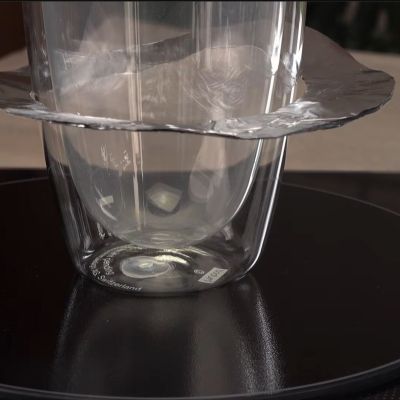
Some of the suggestions were rather benign, such as improving the aluminium foil ring by adding four times more layers to create more mass. Unfortunately adding more layers here had the device refuse to turn on due to the absence of a suitable ferromagnetic target. The difference between the working versions with one to three layers was here also not really noticeable. Various aluminium and copper tape configurations were then attempted, but without much success.

Of note is that while levitating, the metal gets pretty hot. At one point a CD even gets melted to aluminium foil. Even the use of water-filled aluminium cans will only give you so much time, and ramping down the power level on the induction cooker only revealed that this particular model operates only at either at full blast or off. Correspondingly a new induction cooker with claimed constant output was obtained for the next experiments at lower levels.

Interestingly, it was this new induction cooker set to a more reasonable output level that showed the first reasonably static levitation results without immediate conflagration or molten metal splatter risk. Whether this is the kind of levitation display that you want to set up in your living room in lieu of a boring magnetic one is still a good question, but at least this demonstration got downgraded to something potentially safe enough to play around with in a physics class.

🤖 AI 总结
文章作者采纳观众建议,尝试在感应炉上实现悬浮效果,以增加趣味性。

Doing something once is fun, but if you get interesting feedback from viewers on how to make things even more fun, you can only follow all of these instructions and put more random objects on top of an induction cooker, as [Brainiac75] fortunately did.

Much like in the first video, the goal here is to use the Lorentz force that is induced in the object for levitation, ideally without having said object depart for orbit, melt into a puddle of molten metal or be a general hazard to anyone standing in the same room.

Some of the suggestions were rather benign, such as improving the aluminium foil ring by adding four times more layers to create more mass. Unfortunately adding more layers here had the device refuse to turn on due to the absence of a suitable ferromagnetic target. The difference between the working versions with one to three layers was here also not really noticeable. Various aluminium and copper tape configurations were then attempted, but without much success.

Of note is that while levitating, the metal gets pretty hot. At one point a CD even gets melted to aluminium foil. Even the use of water-filled aluminium cans will only give you so much time, and ramping down the power level on the induction cooker only revealed that this particular model operates only at either at full blast or off. Correspondingly a new induction cooker with claimed constant output was obtained for the next experiments at lower levels.

Interestingly, it was this new induction cooker set to a more reasonable output level that showed the first reasonably static levitation results without immediate conflagration or molten metal splatter risk. Whether this is the kind of levitation display that you want to set up in your living room in lieu of a boring magnetic one is still a good question, but at least this demonstration got downgraded to something potentially safe enough to play around with in a physics class.

原文
Trying Out Viewer Suggestions for Levitation on an Induction Cooker

Doing something once is fun, but if you get interesting feedback from viewers on how to make things even more fun, you can only follow all of these instructions and put more random objects on top of an induction cooker, as [Brainiac75] fortunately did.

Much like in the first video, the goal here is to use the Lorentz force that is induced in the object for levitation, ideally without having said object depart for orbit, melt into a puddle of molten metal or be a general hazard to anyone standing in the same room.

Some of the suggestions were rather benign, such as improving the aluminium foil ring by adding four times more layers to create more mass. Unfortunately adding more layers here had the device refuse to turn on due to the absence of a suitable ferromagnetic target. The difference between the working versions with one to three layers was here also not really noticeable. Various aluminium and copper tape configurations were then attempted, but without much success.

Of note is that while levitating, the metal gets pretty hot. At one point a CD even gets melted to aluminium foil. Even the use of water-filled aluminium cans will only give you so much time, and ramping down the power level on the induction cooker only revealed that this particular model operates only at either at full blast or off. Correspondingly a new induction cooker with claimed constant output was obtained for the next experiments at lower levels.

Interestingly, it was this new induction cooker set to a more reasonable output level that showed the first reasonably static levitation results without immediate conflagration or molten metal splatter risk. Whether this is the kind of levitation display that you want to set up in your living room in lieu of a boring magnetic one is still a good question, but at least this demonstration got downgraded to something potentially safe enough to play around with in a physics class.

中文翻译
尝试观众关于电磁炉悬浮的建议

做一次很有趣,但如果你从观众那里得到有趣的反馈,了解如何让事情变得更有趣,你只能遵循所有这些指示,并把更多随机物体放在电磁炉上,就像[Brainiac75]幸运地所做的那样。

第一个视频非常相似,这里的目标是利用物体中感应出的洛伦兹力来实现悬浮,理想情况下,不要让该物体飞向轨道、熔化成金属液池,或对同房间内的任何人构成普遍危险。

有些建议相当温和,例如通过增加四倍层数来增加铝箔环的质量。不幸的是,增加更多层数后,设备因缺少合适的铁磁目标而拒绝启动。而一到三层的工作版本之间,差异也并不明显。随后尝试了各种铝和铜胶带配置,但效果不佳。

值得注意的是,在悬浮过程中,金属会变得非常热。有一次,一张CD甚至熔化到了铝箔上。即使是使用装满水的铝罐,也只能给你那么多时间,而将电磁炉的功率调低只表明,这个特定型号要么全速运行,要么关闭。相应地,为了在更低功率下进行后续实验,我们获得了一台声称具有恒定输出的新电磁炉。

有趣的是,正是这台设置到更合理输出水平的新电磁炉,首次展示了相对稳定的悬浮结果,没有立即着火或熔融金属飞溅的风险。这是否是那种你想要在客厅里设置、取代无聊的磁悬浮展示的悬浮演示,仍然是个好问题,但至少这个演示已经降级为可能在物理课上摆弄的足够安全的东西了。