← 返回列表
🔗 原文
解决关于焊接与压接大电流连接器的争论
Settling the Debate on Soldered versus Crimped High-Current Connectors

For some reason there’s heated debate around the topic of whether high current carrying wiring ought to use crimped or soldered connections, even though the industry standard is to crimp everything. As a practical demonstration of why this is the case, [Will Prowse] set up a test involving a rig capable of dispensing a few hundred amps through both a crimped and a soldered copper cable.
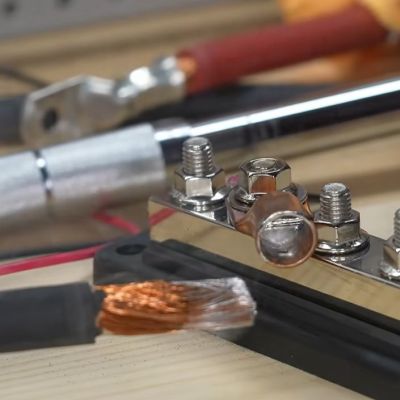
Prior to making things go spicy, [Will] made sure to check the resistance of the two cables, noting that the soldered version had significantly lower resistance than the crimped connectors. This could be one metric that proponents of soldered connectors can point to as a benefit.

Of course, the main benefit of crimping is that you create a cold weld if crimped properly, which is a sold-state welding process that effectively blends two metal surfaces together. This is also why wire wrap is generally considered to be so very reliable, as it creates a gas-free, solid connection that does not rely on a softer, dissimilar material like solder to hold things together. Of note here is also that the cold weld process tends to continue for a while, so this kind of connection is likely to get better over time.

In the subsequent testing this difference is demonstrated quite well, especially when both cables are subjected to the sort of mechanical abuse that would be expected in an installation, such as vibrations and direct impacts. Here the soldered connections quickly begin to fail, resulting in one soldered connector even unsoldering itself due to heat development. Ultimately cold welding is simply superior over relying on a flimsy and capricious interface of intermetallic compounds.

🤖 AI 总结
尽管行业标准是压接,但高电流连接器使用焊接还是压接的争论仍十分激烈。

For some reason there’s heated debate around the topic of whether high current carrying wiring ought to use crimped or soldered connections, even though the industry standard is to crimp everything. As a practical demonstration of why this is the case, [Will Prowse] set up a test involving a rig capable of dispensing a few hundred amps through both a crimped and a soldered copper cable.

Prior to making things go spicy, [Will] made sure to check the resistance of the two cables, noting that the soldered version had significantly lower resistance than the crimped connectors. This could be one metric that proponents of soldered connectors can point to as a benefit.

Of course, the main benefit of crimping is that you create a cold weld if crimped properly, which is a sold-state welding process that effectively blends two metal surfaces together. This is also why wire wrap is generally considered to be so very reliable, as it creates a gas-free, solid connection that does not rely on a softer, dissimilar material like solder to hold things together. Of note here is also that the cold weld process tends to continue for a while, so this kind of connection is likely to get better over time.

In the subsequent testing this difference is demonstrated quite well, especially when both cables are subjected to the sort of mechanical abuse that would be expected in an installation, such as vibrations and direct impacts. Here the soldered connections quickly begin to fail, resulting in one soldered connector even unsoldering itself due to heat development. Ultimately cold welding is simply superior over relying on a flimsy and capricious interface of intermetallic compounds.

原文
Settling the Debate on Soldered versus Crimped High-Current Connectors

For some reason there’s heated debate around the topic of whether high current carrying wiring ought to use crimped or soldered connections, even though the industry standard is to crimp everything. As a practical demonstration of why this is the case, [Will Prowse] set up a test involving a rig capable of dispensing a few hundred amps through both a crimped and a soldered copper cable.

Prior to making things go spicy, [Will] made sure to check the resistance of the two cables, noting that the soldered version had significantly lower resistance than the crimped connectors. This could be one metric that proponents of soldered connectors can point to as a benefit.

Of course, the main benefit of crimping is that you create a cold weld if crimped properly, which is a sold-state welding process that effectively blends two metal surfaces together. This is also why wire wrap is generally considered to be so very reliable, as it creates a gas-free, solid connection that does not rely on a softer, dissimilar material like solder to hold things together. Of note here is also that the cold weld process tends to continue for a while, so this kind of connection is likely to get better over time.

In the subsequent testing this difference is demonstrated quite well, especially when both cables are subjected to the sort of mechanical abuse that would be expected in an installation, such as vibrations and direct impacts. Here the soldered connections quickly begin to fail, resulting in one soldered connector even unsoldering itself due to heat development. Ultimately cold welding is simply superior over relying on a flimsy and capricious interface of intermetallic compounds.

中文翻译
解决关于焊接与压接大电流连接器的争论

不知何故,关于承载大电流的接线究竟应该采用压接还是焊接连接,一直存在激烈争论,尽管行业标准是全部压接。为了实际演示其中的原因,[Will Prowse] 搭建了一个测试装置,通过一根压接电缆和一根焊接电缆分别施加几百安培的电流。

在让情况变得“火热”之前,[Will] 检查了两根电缆的电阻,发现焊接版本的电阻明显低于压接连接器。这或许是焊接连接支持者可以指出的一个优点指标。

当然,压接的主要好处是,如果正确压接,会形成一种冷焊,这是一种固态焊接过程,能有效地将两种金属表面融合在一起。这也是为什么绕线通常被认为非常可靠,因为它创建了一种无气体、牢固的连接,不依赖焊料这种较软且不同质的材料来固定连接。值得注意的是,冷焊过程往往会持续一段时间,因此这种连接可能会随着时间的推移而变得更好。

在随后的测试中,这种差异得到了很好的体现,尤其是当两根电缆都承受安装中可能遇到的机械滥用(如振动和直接冲击)时。焊接连接很快开始失效,其中一个焊接连接器甚至因发热而自行脱焊。归根结底,冷焊比依赖脆弱且变化无常的金属间化合物界面要优越得多。